On healing, settler colonialism, and Hawaiʻi: How can we use Idle No More’s momentum to push for changes in education?

In The Seeds We Planted: Portraits of a Native Hawaiian Charter School, Noelani Goodyear-Kaʻōpua explores the paradoxes of reasserting Indigenous knowledge within a school system that has historically underwritten settler colonialism. She also asks how Indigenous and settler peoples can work together to unmake settler-colonial logics of elimination and containment. Here, Goodyear-Kaʻōpua comments on ways … More On healing, settler colonialism, and Hawaiʻi: How can we use Idle No More’s momentum to push for changes in education?

Housing and race: More than meets the eye

What is this billboard not asking us to question? BY DIANNE HARRISArchitectural historian and director of the Illinois Program for Research in the Humanities at the University of Illinois, Urbana-Champaign At a prominent intersection in my city, a billboard presents the face of a white woman, her furrowed brow and sad eyes conveying a state … More Housing and race: More than meets the eye

Sustainability and North Dakota’s oil boom

The North Dakota frontier from Bentley, ND, in 2007. The state is currently experiencing phenomenal growth, and Dean Hulse looks at the environmental consequences of such growth. Photo from afiler via Flickr. Murmurings about North Dakota’s current oil boom began to surface in late 2008. While a global financial crisis was under way, North Dakota’s … More Sustainability and North Dakota’s oil boom

Archival analysis and cold war Pan Americanism

Courtyard of the Pan American Union, Washington, DC, 1943. Library of Congress, Prints and Photographs Division, FSA-OWI Collection (LC-USW36-734). Photograph by John Collier. Among the buildings on the National Mall in Washington, D.C., only the Pan American Union (PAU) houses an international organization. The first of many anticipated “peace palaces”constructed in the early twentieth century, … More Archival analysis and cold war Pan Americanism

Remembering the Hollywood blacklist and those artists who were silenced more than sixty years ago.

Cited for contempt of Congress, nine Hollywood men give themselves up to U.S. Marshal on December 10, 1947, after refusing to answer questions about their alleged involvement with the Communist Party. From left: Adrian Scott, producer and screenwriter; Edward Dmytryk, director; Samuel Ornitz, screenwriter; Lester Cole, screenwriter; Herbert Biberman, screenwriter and director; Albert Maltz, screenwriter; … More Remembering the Hollywood blacklist and those artists who were silenced more than sixty years ago.

Most things written about the Jonestown saga end on Nov. 18, 1978, the day more than 900 Americans died. "Stories from Jonestown" begins on that day.

Q&A with Leigh FondakowskiEmmy-nominated coscreenwriter for the adaptation of The Laramie Project for HBO Leigh Fondakowski spent three years traveling the U.S. to interview survivors of the Jonestown massacre, many of whom have never talked publicly about the tragedy. Using more than two hundred hours of interview material, Fondakowski creates intimate portraits of these survivors … More Most things written about the Jonestown saga end on Nov. 18, 1978, the day more than 900 Americans died. "Stories from Jonestown" begins on that day.

Will 2012 be remembered in cinematic history as the year Peter Jackson introduced us to new technology with The Hobbit?

As movie awards season is upon us, we thought we’d take the opportunity to discuss a significant development in film in 2012. BY ALICE MAURICEAssociate professor of English at the University of Toronto <!– /* Font Definitions */ @font-face {font-family:Times; panose-1:2 0 5 0 0 0 0 0 0 0; mso-font-charset:0; mso-generic-font-family:auto; mso-font-pitch:variable; mso-font-signature:3 0 … More Will 2012 be remembered in cinematic history as the year Peter Jackson introduced us to new technology with The Hobbit?

Integrity, survival, excellence: On the double life of George Cukor, one of the Golden Age’s great Hollywood directors.

Portrait of George Cukor in 1973 at home in Los Angeles. Q&A WITH BIOGRAPHER PATRICK MCGILLIGAN What is the first thing we need to know about George Cukor? Starting out, I myself knew very little about him really, even though I had met him when he was doing publicity for one of his last films. … More Integrity, survival, excellence: On the double life of George Cukor, one of the Golden Age’s great Hollywood directors.

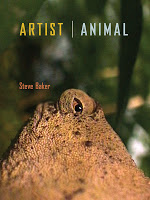
Animals, artists, and the question of ethics: A dialogue with Steve Baker.

“There seems to be a lingering expectation that art should provide consolation – the consolation that terrible things are only happening far away, or that artists unreservedly condemn such things.” What follows here is an interview with Steve Baker about his new book, Artist Animal, in Minnesota’s Posthumanities series (further details about the book at … More Animals, artists, and the question of ethics: A dialogue with Steve Baker.